Can I have whey protein with ulcerative colitis?
By Jude Horak, UC patient. Sources checked 2026-08-12.
Also searched as: whey protein powder, whey protein concentrate.
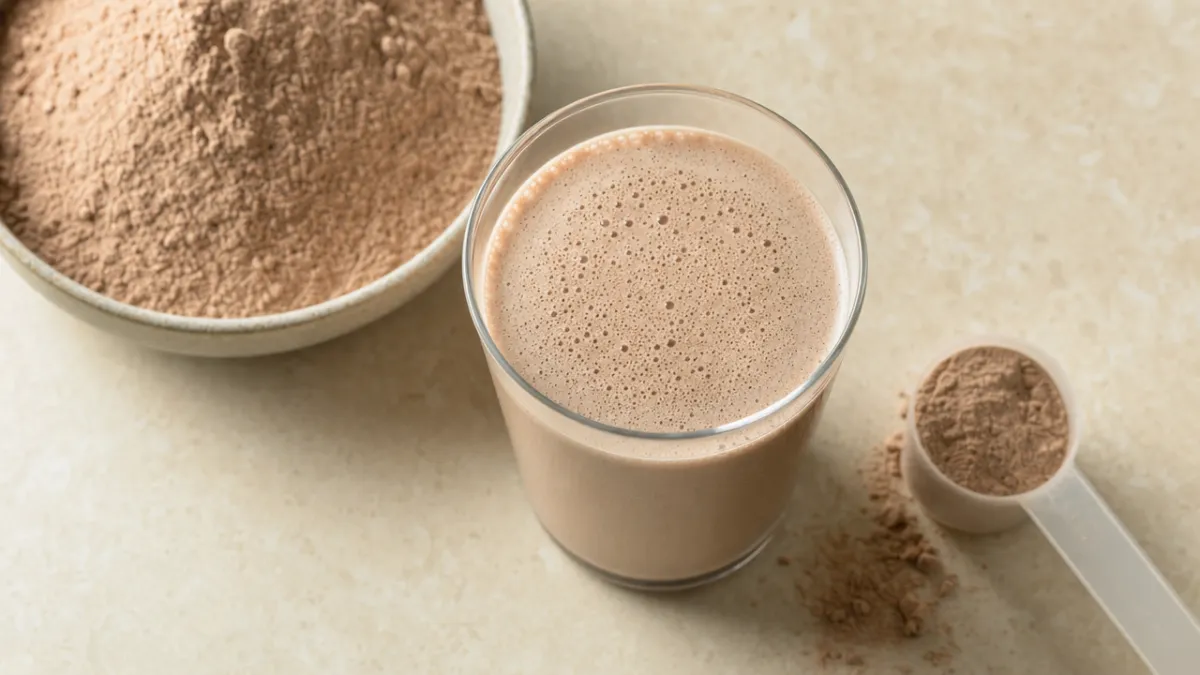
Whey protein is derived from milk and standard whey protein concentrate still contains some lactose, which can cause symptoms in people who are lactose intolerant; whey protein isolate has most of that lactose removed and may be better tolerated. A small randomized controlled trial in Crohn's disease patients in remission found that oral whey protein improved intestinal permeability and gut lining structure about as well as glutamine supplementation over two months, and animal research on colitis has shown whey-derived peptides can reduce inflammatory markers, but this is limited, early evidence rather than proof it treats ulcerative colitis.
During a flare
If lactose is a known trigger, standard whey concentrate may cause bloating or diarrhea during a flare; whey isolate has less lactose and may be an easier starting point.
In remission
Tolerance varies by individual and by whey type (concentrate vs. isolate); those managing protein needs in remission can trial a small serving of isolate first.
What the research says about whey protein and UC
The most relevant human study is a randomized controlled trial indexed on PubMed in which adults with Crohn's disease in remission took either glutamine or whey protein daily for two months. Both groups showed improvement in intestinal permeability and in the appearance of the gut lining on biopsy, with no meaningful difference between the two, which the authors read as whey being a reasonable alternative to glutamine for supporting barrier function. The trial was small, was in Crohn's rather than ulcerative colitis, used a specific whey product, and was not designed to show whether whey changes symptoms or flare rates over time, so it does not demonstrate that whey protein improves UC.
The second source, in PMC, fed a low-temperature-processed whey protein concentrate to mice with chemically induced colitis and reported reduced inflammatory markers and changes in gene expression consistent with less gut inflammation. That is animal work with a particular processing method, and the authors framed it as a lead for further study rather than a recommendation. Neither source addresses the lactose in standard whey concentrate, which is the more practical issue for people with UC and lactose intolerance; that point comes from general lactose guidance. Whey isolate, which has most of the lactose filtered out, has not been compared with concentrate in any IBD trial.
Ways to make it gentler
- Choose whey protein isolate over concentrate for lower lactose content
- Mix with tolerated liquids and start with a partial serving
Safer swaps
- whey protein isolate
- plant-based protein powder
How I handle whey protein
I use whey protein for one specific job: getting protein in on days when eating enough feels like work, so I keep it simple. I buy an unflavored or lightly flavored isolate with a short ingredient list, and I mix a half scoop into lactose-free milk or a smoothie rather than a full scoop in water on an empty stomach. Concentrate is cheaper, but the lactose in it is a variable I do not want when I am already unsettled. I also read past the protein claim to the sweetener: sugar alcohols like sorbitol and the intense sweeteners in some tubs seem more likely to bother a touchy gut than the whey itself, so I avoid those during flares. On good weeks I am less fussy. If I am eating well from real food, I skip the powder altogether.
How much, and how to test it
A half scoop of whey isolate, roughly 10 to 12 grams of protein, mixed into a tolerated liquid and taken with a meal is a sensible first test. Keep the same product for several tries, since flavors and sweeteners differ tub to tub. Bloating or gas within a few hours points to lactose, which favors switching from concentrate to isolate, while looser stool over the next day is more often a sweetener or an unusually large hit of protein at once. If a half scoop is fine after three or four uses, move to a full scoop. Persistent symptoms at any serving are a reason to try a plant-based powder instead.
What you get from whey protein
A scoop of whey isolate typically supplies 20 to 25 grams of highly absorbable protein for around 100 to 120 calories, with small amounts of calcium and, in concentrate, a little fat and lactose. Protein needs rise during active inflammation and recovery, when muscle loss is common, and a shake is often easier to manage than a plate of meat on a low-appetite day. It provides no fiber and little else, so it supplements meals rather than replacing them.
Why this one shows up on trigger lists
Whey Protein is flagged for one of the properties that most commonly cause UC symptoms. Each page explains the mechanism and lists every other food that carries it.
Questions people ask about whey protein and UC
Is whey protein ok with ulcerative colitis?
Often, yes, particularly whey isolate, which has most of the lactose removed. The human evidence is limited to a small trial in Crohn's disease that found whey supported gut barrier measures about as well as glutamine, which is encouraging but not proof of anything in UC. For most people the practical question is tolerance, and a small serving of isolate with a meal is the usual way to find out.
Why does whey protein give me diarrhea or bloating?
Three common culprits. Lactose in whey concentrate is the first, especially during active disease when lactase output tends to drop. Sugar alcohols and intense sweeteners used to flavor many powders are the second, and they are known to loosen stool at moderate amounts. A large serving of protein powder in water on an empty stomach is the third. Switching to an unflavored isolate mixed with food resolves most cases.
Whey concentrate or whey isolate for colitis: which is better?
Isolate is the safer starting point. It is filtered further, so it carries roughly a tenth of the lactose and less fat than concentrate, and it delivers more protein per scoop. Concentrate is cheaper and perfectly fine for people who tolerate lactose well. If you already drink regular milk without trouble in remission, concentrate is a reasonable choice; if milk bothers you, isolate or a hydrolyzed whey is more likely to sit well.
Should I use plant protein instead of whey with ulcerative colitis?
Neither is clearly better for UC in the research cited here. Plant powders remove the lactose question entirely but often bring their own issues: pea protein can cause gas in some people, and many plant blends contain added fiber, gums, or sugar alcohols. Whey isolate has the more complete amino acid profile and a small amount of supportive evidence in IBD. Trying a small serving of each is more useful than picking by category.
Sources
- Glutamine and whey protein improve intestinal permeability and morphology in patients with Crohn's disease: a randomized controlled trial (PubMed (National Library of Medicine))
- The Effect of Oral Intake of Low-Temperature-Processed Whey Protein Concentrate on Colitis and Gene Expression Profiles in Mice (PMC (National Library of Medicine))
Written by Jude Horak, a UC patient. Sources last checked 2026-08-12. Spotted an error? Tell me.